
Coming Home After Hip Replacement: The First Week at Home
Coming home after hip replacement: who stays the first week, how to make one floor work, which chair and toilet, and when to call.
ElderHearth offers general information, not medical advice. Hip precautions differ by surgical approach, and the sheet in the discharge bag overrides anything general, this page included.
Coming home after hip replacement is a staffing problem first, a one-floor problem second, and a shopping problem third. MedlinePlus is specific: "You will need to have someone with you at home for 1 to 2 weeks after you leave the hospital or rehab center." The first week home after hip replacement is decided by who stays, whether the bed and the toilet share a floor, and whether the favorite armchair keeps the hips above the knees.
If someone is asking what to send, that list is on gifts for someone recovering from hip surgery. This page is the week itself.
Does someone have to stay in the house?
Yes, for a stretch measured in weeks, not in the afternoon of discharge. The same discharge page names the jobs that person is there for: "You will need help preparing meals, bathing, moving around the house, and doing other daily activities."
That sits next to another line families misread. By the time they leave, MedlinePlus says they should be able to walk with a walker or crutches without needing much help, dress with only a little help, and use the toilet without much help. Those are discharge tests. Walking with a walker still leaves meals, bathing, and the night to the person who stays.
AAOS OrthoInfo puts a wider band on it: "you will need some help at home anywhere from several days to several weeks after you leave the hospital." The same page says "Your hospital stay will typically last 1 to 2 days", and that some replacements go home the same day. Fracture cases run on a different clock; that timeline is in hip fracture recovery in the elderly.
If nobody can stay, do not improvise. The home-prep page is direct: "If you do not have someone to help you at home for the first 1 or 2 weeks after surgery, ask your surgeon about having a trained caregiver come to your home." AAOS adds that if there is no help, or another barrier to self-care, going straight home may be unsafe, and a short stay in rehab or a skilled nursing center is the alternative. Ask before the car is packed. What that help costs, and who pays, is in in-home care for seniors. If the discharge date itself still looks too early, the same-day Medicare process is in hospital discharge appeal.
Which movements are actually off limits?
Read the sheet in the bag before you read the internet. AAOS is blunt about why: "Both the specific precautions you need to take and the amount of time you need to follow them will vary depending on which surgical technique your surgeon used." The sheet wins.
The set below is the one MedlinePlus prints for a new hip joint.
On bending: "Avoid hip flexion greater than 90 degrees (a right angle)." On crossing: "Do not cross your legs or ankles when you are sitting, standing, or lying down." On dressing: "Do not dress standing up." Sit. Do not bend to the feet.
Sitting time is written two ways, and they should not be mashed into one number. The discharge page says to "Try not to sit for more than 45 minutes at a time." The joint-care page says to "Try not to sit in the same position for more than 30 to 40 minutes at a time". One limits how long a sit lasts. The other limits how long one position lasts.
Weight on the new hip is the surgeon's call. MedlinePlus says not to put full weight on that side until the surgeon says it is all right, and to keep using the walker or crutches until that same person says to stop. Do not retire the walker because the first walk to the kitchen felt easy.
Can this house work on one floor?
It can, if sleep, the toilet, and meals share a floor for a while. MedlinePlus's home setup is a one-floor plan: "Set up a bed or use a bedroom on the first floor." And: "Have a bathroom or a portable commode on the same floor where you spend most of your day."
A house with stairs can still be the house they come back to. For this week it uses the stairs once. The home-prep page asks families to "Limit your stair use to once a day." Living room as bedroom is ordinary this week. Clear the walker path. Pull the cords. Take up the throw rugs. The discharge page puts small pets on the tripping-hazard list and says not to keep them in the home. The home-prep page says pets that are small or move around may cause a trip, and asks the family to consider having that pet stay elsewhere for the first few weeks.
They do not automatically need a hospital bed. MedlinePlus says: "You may not need a hospital bed, but your mattress should be firm." The height has to work in both directions: feet on the floor when they sit on the edge, and hips higher than knees in that same sit. A bed that is too high is a drop. A bed that is too low is a fold of the hip.
If they must use stairs, the foot order is fixed. "When you are going up, step first with your leg on the side that did not have surgery." "When you are going down, step first with your leg on the side that had surgery." Use the rail every time.
Which chair and which toilet?
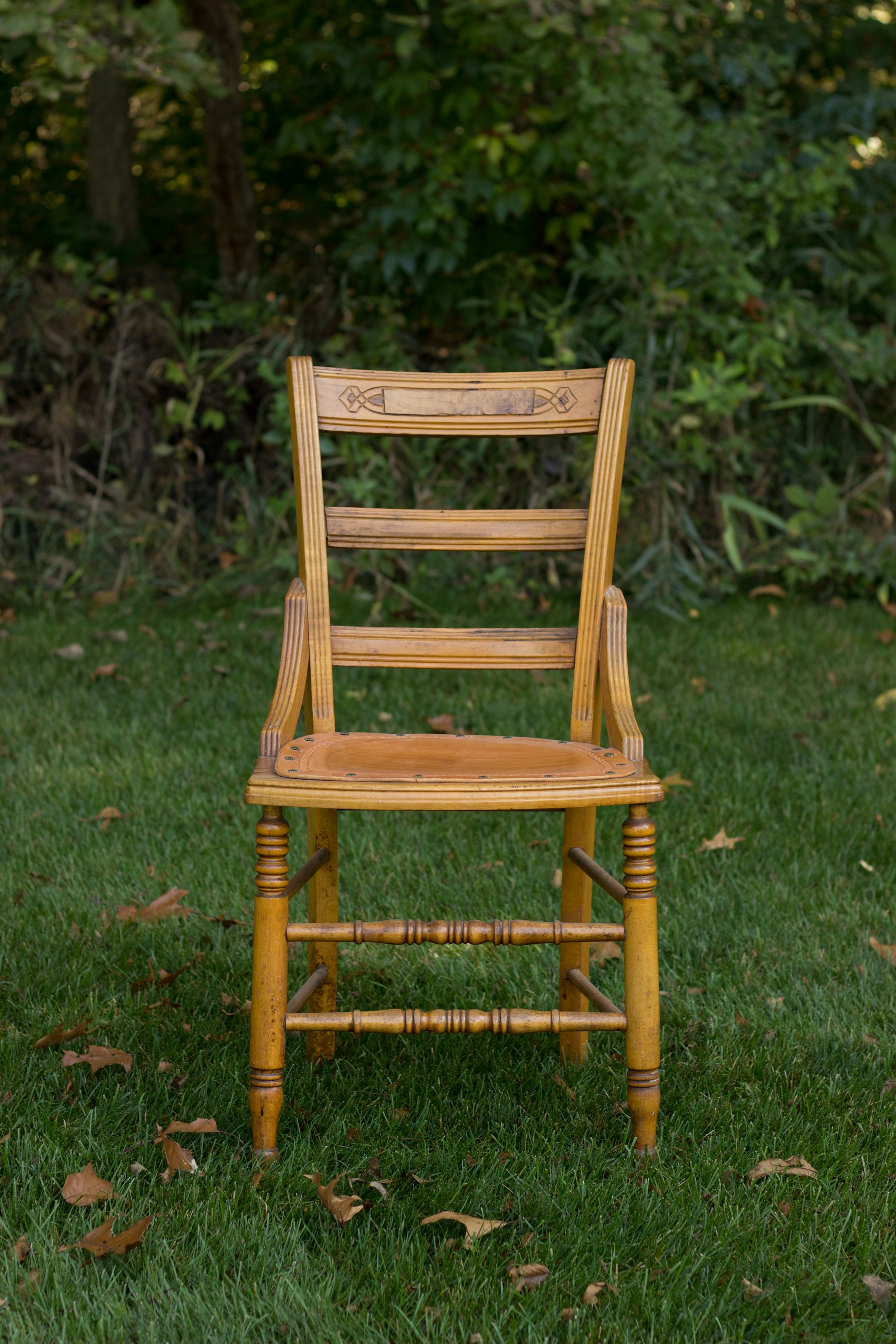
Change the chair before you buy a kit. MedlinePlus's sitting rule is the one that rules out the favorite armchair: "Your hips should be higher than your knees when you are sitting." And: "Sit in a firm chair with a straight back and armrests. Avoid soft chairs, rocking chairs, stools, or sofas." A pillow on the seat is allowed if the chair is still too low. Getting up is a slide to the edge, then a push on the armrests or the walker. Do not rock out of it.
The toilet is the same geometry. A raised toilet seat after hip replacement is there to keep the knees below the hips. The numbers behind extra-tall bowls, and why taller is not always better, are in toilet height for seniors. "Grab bars should be secured vertically or horizontally to the wall, not diagonally." "Do not use towel racks as grab bars. They cannot support your weight." The rest of the room is in bathroom safety for seniors.
| Do this week | Not this week |
|---|---|
| A person in the house overnight | An empty house because they looked fine at discharge |
| Bed, toilet, and meals on one floor | Daily trips upstairs because the bedroom is nicer |
| A firm chair, hips above knees | The low armchair they have always used |
| Sit to dress; operated leg into the pants first | Bending to the floor for socks |
| Walker or crutches until the surgeon says stop | Vacuuming, laundry, or soaking in a tub |
How do they dress, wash, and get in a car after hip replacement?
Dress seated, on a chair or the edge of a stable bed. MedlinePlus's order is the part families skip: "When you are getting dressed, first put pants, socks, or pantyhose on the leg that had surgery." "When you undress, remove clothes from your surgery side last."
The reacher, shoehorn, elastic laces, and sock aid are named on that same page. How each one is used is in daily living aids for seniors. This page will not rank kits.
Showering waits. "Do not shower until 3 to 4 days after your surgery, or when your surgeon told you to shower." When showering is allowed, let water run over the incision, but do not scrub it or let the water beat down on it. "Do not soak in a bathtub, hot tub, or swimming pool." Do not sit down in the bottom of a regular tub. The joint-care page names a tub seat or a stable plastic chair, a rubber mat, a long-handled sponge, and a dry floor. AAOS says most dressings are now waterproof, and that you should still follow the surgeon on how long to wait. The sheet, again.
How to get in a car after hip replacement is a street-level job. "Get into the car from street level, not from a curb or doorstep." If the seat is low, sit on a pillow. Make sure the seat fabric lets them slide. "Do not drive until your hip surgeon says it is OK." Long rides get broken up: stop, get out, and walk about every two hours. The transfer itself, if two people are doing it, is in transfer aids for the elderly at home.
What is a same-day call?
MedlinePlus lists chest pain or shortness of breath among the reasons to contact the surgeon. Those are also emergency symptoms. Call 911 first, then the surgeon.
| Call 911, then the surgeon | Call the surgeon the same day |
|---|---|
| Sudden chest pain or shortness of breath | Calf pain; one leg swollen, red, and warmer than the other |
| Fever greater than 101°F (38.3°C) | |
| Drainage from the incision, or redness around it that is getting worse | |
| A fall on the operated side, or a hip that feels out of place | |
| A sudden increase in pain, or pain the medicine is not covering | |
| Blood in the stool, or stools that turn dark | |
| Nosebleeds, or blood in the urine or stool, if they are on blood thinners |
AAOS says moderate to severe swelling is expected in the first weeks, and that new or severe swelling can be a clot warning. MedlinePlus also notes that "You may also need to take blood thinners for 2 to 4 weeks to lower your risk for blood clots." Do not add a supplement to that list without whoever can see the whole chart.
Wound care stays boring on purpose: keep the dressing clean and dry, change it the way they were shown, and do not scrub the incision in the shower. "Sutures (stitches) or staples will be removed about 10 to 14 days after surgery." The surgeon's dressing instructions beat a general page.
Frequently Asked Questions
Do I need someone at home after hip replacement? Yes: MedlinePlus says you will need someone at home for 1 to 2 weeks after leaving the hospital or rehab.
How do you get in a car after hip replacement? From street level, not from a curb or a doorstep, with the seat high enough that the hip does not fold past the angle on the sheet. If the seat is low, put a pillow on it first and check that they can slide on the fabric. They do not drive until the hip surgeon says so. A long ride needs breaks: MedlinePlus says to stop, get out, and walk about every two hours. If the transfer from chair to car still takes two people, the sequence is on transfer aids for the elderly at home.
Do they need a raised toilet seat after hip replacement? They need a toilet they can sit on with hips higher than knees, which is often a raised seat or a commode on the same floor as the bed. Measure the chair and the toilet against the sheet.
When can they shower after hip replacement? Not until 3 to 4 days after surgery, or whenever the surgeon said, and not in a tub. Keep the incision out of standing water. AAOS notes that most dressings are now waterproof; that still does not override the wait the surgeon wrote down.
Which foot goes first on the stairs? Up with the unoperated leg first, down with the operated leg first, rail in hand every time. Limit that trip to once a day if the house can be rearranged around one floor.
Put the sheet where the house can see it
The first week is won on two facts that already exist: the precautions on the discharge sheet, and the name of the person who will be in the house. Tape the sheet to the refrigerator. Write the covering name on it. Then make one floor work.
The months after a break, if that is how they got here, remain on hip fracture recovery in the elderly. The objects that follow the bending rule are on gifts for someone recovering from hip surgery.
Sources
- MedlinePlus, National Library of Medicine, Hip replacement - discharge (someone at home 1 to 2 weeks, one-floor setup, sitting time of 45 minutes, shower timing, blood thinners, when to call). Fetched 2026-09-29.
- MedlinePlus, Getting your home ready - knee or hip surgery (trained caregiver if no one can stay, stairs once a day, towel racks are not grab bars). Review date 11/7/2024. Fetched 2026-09-29.
- MedlinePlus, Taking care of your new hip joint (90-degree flexion, no crossing, seated dressing, chair and toilet geometry, stair foot order, car from street level). Fetched 2026-09-29.
- AAOS OrthoInfo, Activities After Total Hip Replacement (help at home for several days to several weeks, hospital stay typically 1 to 2 days or outpatient the same day, precautions vary by surgical technique). Fetched 2026-09-29.