
Mobility Scooters for Seniors: When a Parent Needs One, and How to Use It (2026)
A mobility scooter for elderly parents: the signs it is time, three-wheel vs four-wheel, the first ride, flying with it, and what Medicare pays for.
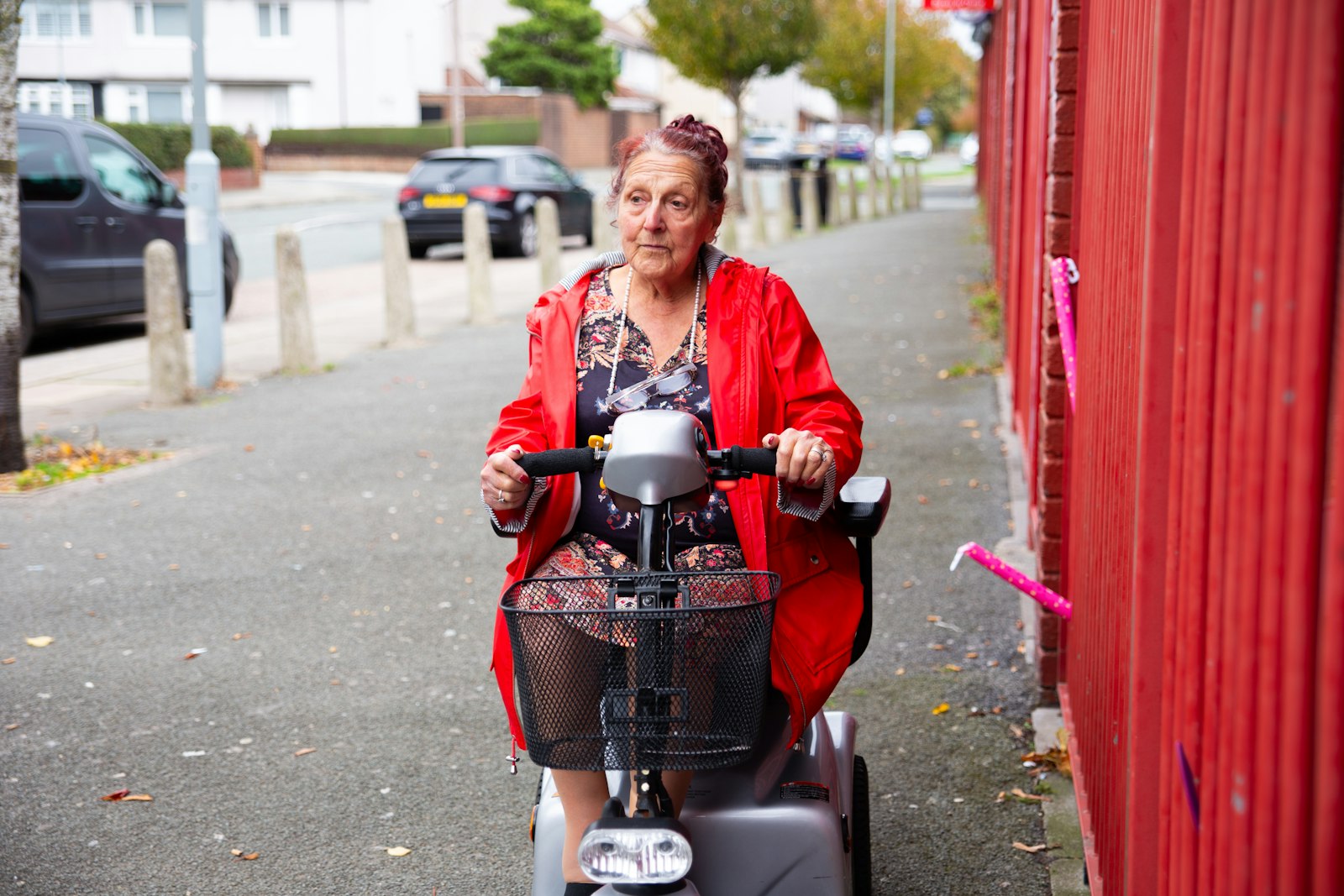
ElderHearth offers general information, not medical advice. Whether a scooter is safe for a particular person is a question for their doctor or an occupational therapist, especially where balance, vision or memory are changing. ElderHearth earns a commission on the Vive Health links below, at no cost to you; specifications come from the product pages linked where they are used.
A mobility scooter for elderly parents is rarely bought at the moment it is first needed. It is bought a year later, after the walks have stopped. This guide is about closing that gap: the things a parent says and does that mean a scooter would give them their afternoons back, which of the three kinds fits which life, what the first week of using one should look like, how to get a parent who has said no to try it, and what Medicare will and will not pay for. The product specifications come from Vive Health's scooter pages, and the safety and training points from a published review of scooter driver training in the journal Gerontology.
The signs a parent has reached the scooter, in their words
A parent does not say "I need a mobility scooter." They say other things, and do other things, and these are the ones that mean it is time to raise the subject.
What they say about their body:
- "The store wore me out." A trip to the supermarket that used to be an errand now needs the rest of the day to recover from.
- "My knee is fine in the morning." Pain that builds through the day, so that walking is possible in the morning and not by three o'clock.
- "I just need to sit for a minute." Walking two hundred yards means planning where to stop, and a route without benches is a route not taken.
- "I'm fine at home." True, and the point: the house is small enough to manage, and the world outside it has shrunk to the car and back.
What they feel, and mostly do not say:
- Not wanting to ask for a ride every time. The daughter who drives them to the pharmacy is loved and is also a reason not to go.
- Fear of being caught out, of walking too far and not being able to get back, which is a good reason to stop going anywhere.
- Embarrassment at the idea of the scooter itself, which is the part this guide comes back to.
What they have stopped doing:
- The daily walk to the park, the church coffee hour, the farmers' market, any place that involves walking and standing for an hour.
- Shopping for themselves. Grocery runs are now a son's or daughter's job, which means the parent no longer chooses what is in the kitchen.
- Saying yes to invitations that involve a parking lot and a long walk in.
A scooter answers the third list directly. It does not treat the knee or the breathlessness; it removes distance as the reason to say no. A parent who can still walk around the house and stand to cook, but who cannot cover the length of a store or a park, is the person the scooter was designed for, and that is the group a published review describes it as suiting.
Three kinds of scooter, and who each one is for
Vive Health sells three shapes, and they map onto three lives. The numbers below are from its product pages, and the ones that decide the choice are turning radius, ground clearance, the weight of the heaviest piece, and the weight capacity.
Three wheels, for indoors and tight aisles. The three-wheel scooter has the tightest turn of the three. Its product page lists "Turning Radius: 2.6'", "Weight Capacity: 265 lbs.", "Total Weight: 77 lbs." and "Heaviest Piece: 29 lbs.", with two inches of ground clearance and a seat-to-ground height range of 18.5 to 21.5 inches. The single front wheel is what lets it pivot in a store aisle or a hallway, and the same geometry is why a three-wheel scooter is the one to be careful with on a slope taken sideways or a turn taken fast. It suits a parent whose days are shops, a senior center, a paved neighborhood.
Four wheels, for outdoors and stability. The four-wheel scooter trades the tight turn for a wider footprint. Its product page lists "Top Speed: 3.7 Mph", "Maximum Drive Range Per Charge: 12 Miles", "Weight Capacity: 265 Lbs." and "Total Weight: 88.2 Lbs.", with the same 29-pound heaviest piece and "Incline Capability: Up To 6 Degrees". The page's own FAQ answers the question every family should ask before buying any scooter, whether the Vive scooter can make it over a two-inch doorstep: it gives the ground clearance as 1.57 inches and says the scooter "will not be able to clear 2" doorsteps." Measure the threshold at the parent's front door and the curb at the end of the driveway before choosing, because a scooter that cannot leave the house on its own is a chair.
Folding, for the car trunk and the airport. The folding scooter is the lightest and the one with the lowest capacity. Its product page lists "Total Weight: 55.11 lbs", "Weight Capacity: 220 lbs", "Maximum Drive Range Per Charge: 11.3 miles", "Turning Radius: 6.5'" and "Maximum Incline: 9 degrees", with one inch of ground clearance, a 24-volt lithium battery and "Automatic folding with remote control". One inch of clearance and a six-and-a-half-foot turning circle make it a smooth-surface machine: airports, cruise ships, malls, the sidewalk from the car to the restaurant. It is the scooter for the parent who travels with a son or daughter, not for the parent who wants to cross a park alone.
Vive sells all three direct: the compact indoor model, the outdoor model and the folding travel model, each with a removable basket, a headlight and a horn, and the two larger ones in a choice of colors.
The rule of thumb that falls out of those numbers: the more a parent will use the scooter outdoors and alone, the more the four-wheel model's clearance and stability matter; the more it will ride in a trunk, the more the folding model's weight matters; and the tighter the spaces, the more the three-wheel model's turning radius matters.
Choosing the one that fits the parent and the house
Four measurements settle most choices, and all four come from the parent and the house rather than from the catalog.
- The parent's weight, with a margin. The three-wheel and four-wheel models are rated to 265 pounds and the folding model to 220. A rating is a maximum, not a target; a coat, a bag of groceries and a full basket ride along.
- The tallest threshold on the daily route. The front door sill, the garage lip, the curb cut at the corner. Compare it with the ground clearance: two inches on the three-wheel model, 1.57 inches on the four-wheel, one inch on the folding model. A scooter that has to be lifted over the front step every day will be left in the garage.
- The narrowest turn. A hallway corner, the gap between the kitchen table and the wall, a bathroom doorway. A 2.6-foot turning radius makes those turns; a 6.5-foot one does not, and a scooter that cannot turn around indoors will be parked outside, which means the parent walks the last thirty feet anyway.
- Who lifts it, and into what. The heaviest piece of the three-wheel and four-wheel models is 29 pounds once they are taken apart; the folding model is 55 pounds in one piece. If the parent will load it alone, the 29-pound piece is the number; if a son or daughter will load it, the folding model's one-button fold is the convenience.
Then two things to check on the person rather than the scooter, and this is where a doctor or an occupational therapist earns their visit. A scooter is steered with the arms and hands and balanced from the trunk, so the same review of scooter driver training that documents the benefits describes scooters as suited to people "who have sufficient upper body strength and dexterity, and postural stability." A parent who cannot hold a tiller for twenty minutes, or who lists to one side in a chair, may be better served by a power wheelchair, which is the section after next. And a parent whose eyesight or judgment is changing needs the doctor's view before, not after, the first ride.
The first week: how to use a mobility scooter for the first time
The evidence on scooters says one thing plainly: driving skill is learnable, and it is learned by practice on specific tasks rather than by reading. The Gerontology review of six clinical studies found that "MMS driving skills that can be improved through driver training include: weaving, negotiating with and avoiding pedestrian interference, simultaneous reading of signs and obstacle avoidance in path, level driving, forward and reverse driving, figure 8s, turning in place, crossing left slope, maneuvering down a 2-inch curb, and driving up and down inclines." That list is a practice course, and it can be run at home in the first week with the scooter's own controls.
Day one, in the driveway, speed dial at its lowest. Every Vive scooter has a speed dial; the four-wheel page describes it as adjusting "up to 3.7 mph so you can go at a safe pace", and the lowest setting is walking pace. Start there and stay there for the first two sessions. Forward, stop, reverse, stop. The scooter stops when the lever is released, which surprises people used to cars; let the parent feel that before anything else.
Day two, figure eights and turning in place. Two cones, or two buckets, twenty feet apart. Figure eights teach the turning radius in the body rather than on paper, and turning in place teaches where the rear wheels go, which is behind and to the outside of where the parent is looking.
Day three, the threshold and the curb. The front door sill, taken straight on and slowly. Then a curb cut, taken square, not at an angle. The review's list includes "maneuvering down a 2-inch curb" as a skill in its own right; going down is harder than going up, because the front wheel drops first.
Day four, the slope. A driveway or a ramp, up and then down, and then, if the parent will use the scooter on sidewalks, a slope taken across rather than along. The four-wheel model is rated to six degrees and the folding model to nine; the three-wheel model's page gives no incline figure, which is itself a reason to keep it on level ground. Never take a slope sideways on a three-wheel scooter at speed.
Day five, the store. The first real trip, with a companion walking alongside. Aisles, other shoppers, a checkout, backing out of a dead end. Turn the speed dial down again at the door.
Two habits that belong in the first week and stay. Charge it every night: the four-wheel and three-wheel models use a removable battery pack with an off-board charger, so the pack can come indoors while the scooter stays in the garage; the folding model charges on board. And keep the key or the power switch off whenever the parent gets on or off, because a lever brushed while mounting is how a scooter drives into a wall.
Getting a parent who has said no to try it
The refusal is usually about what the scooter says, not what it does, and the same is true of walkers; our guide to convincing an elderly parent to use a walker is the longer version of what follows. Three approaches work more often than argument does.
Rent before buying, and rent it for a destination. A scooter rented for a day at a botanical garden, a fair or a zoo is how visitors of any age cover four miles of paths, and it says nothing about aging. A parent who has spent a day riding one somewhere pleasant has an opinion about scooters that is no longer theoretical.
Let the parent do the choosing. Color, basket, seat height, three wheels or four. A scooter chosen is owned; a scooter delivered is imposed. The Vive models come in several colors, which is a small thing that matters.
Frame it as the walk, not the scooter. "Would you come to the park with me on Sunday" is a different sentence from "I think you need a scooter." The scooter is how the first sentence becomes possible. If the parent's objection is that they can still walk, agree, and say the scooter is for the days and distances when walking would cost the next day.
When a scooter is no longer enough, and a power wheelchair is
The line between a scooter and a power wheelchair is not price or range; it is posture and hands. A scooter asks the rider to sit upright without support, reach forward to a tiller, and steer with both arms. A power wheelchair is driven from a joystick at the armrest, with the back and sides of the chair supporting the trunk, and it turns within its own length.
The signs that the line has been crossed: the parent slides or leans in the scooter seat after ten minutes; the hands tire on the tiller; a stroke, Parkinson's disease or arthritis in the shoulders has taken the reach; the scooter cannot turn in the parent's own kitchen. Vive's lightest power chair, the Airframe, is described on its product page as weighing "just 44 lbs with the battery", with a joystick "featuring adjustable sensitivity" and "up to 9 miles on a single charge", rated to 225 pounds. Its range is shorter than the scooters', which is the trade for a chair that folds and turns in a bathroom.
If that description fits, the folding power wheelchair is the model to compare against the scooters above, and the sizing questions are the same four: weight, threshold, turn, and who lifts it.
A power wheelchair is also the device that more often fits Medicare's test, which is need inside the home; a scooter that cannot turn in the kitchen does not meet it. That is the next section.
What Medicare pays, and what it does not
Medicare Part B treats scooters, which it calls power-operated vehicles, and power wheelchairs the same way on paper. Medicare's wheelchairs and scooters coverage page says "Part B covers power wheelchairs and scooters only when they're medically necessary", that "You must have a face-to-face examination and a written prescription from a treating provider before Medicare covers a power wheelchair or scooter", and that after the deductible "you pay 20% of the Medicare-approved amount". The equipment has to come from a supplier enrolled in Medicare, and the page notes that certain power wheelchairs need prior authorization, which the supplier requests.
The words doing the work are "medically necessary", and Medicare's definition of durable medical equipment, given on the same page, is equipment a doctor orders for use in the home. A parent who walks fine around the house and needs the scooter to reach the park is, in Medicare's terms, not a candidate; the scooter is for the outdoors, and Medicare pays for the indoors. Our guide to does Medicare cover a wheelchair? walks through the face-to-face visit and the supplier rules, and best mobility scooters compares the models that Medicare suppliers carry.
So a scooter bought for the outdoors is a cash purchase, and the prices run from about $625 for the three-wheel model to $800 for the folding one at Vive's list prices on the day we read them. Vive Health does not accept Medicare, Medicaid or HSA cards, and says so in its FAQ; it offers PayPal financing on eligible items. Its scooters ship free within the continental United States, and its return policy gives thirty days with an authorization number first. Read our Vive Health review for the return and guarantee details before ordering anything this size; a scooter that arrives and is the wrong one is a heavy thing to send back.
Taking a mobility scooter on a plane
Yes, and the rules depend on the battery. The FAA's PackSafe page covers scooters with sealed lead-acid batteries, the kind in the three-wheel and four-wheel models, under the heading for nonspillable batteries: "The battery may remain installed if it is securely attached to the mobility device, the design of the wheelchair or mobility aid provides protection from damage to the battery, and the terminals are protected from a short circuit." For a lithium battery, the folding model's kind, the same page says "Lithium ion battery size is limited to 300 watt hours (Wh)", that where the device does not protect the battery "Lithium ion batteries must be removed from this type of mobility device and battery terminals protected from short circuit", and that in that case "The lithium ion batteries must be carried in carry-on baggage only." The folding model's 24-volt, 10-amp-hour battery is 240 watt hours, under the limit.
Every version of the rule ends the same way: "For complete passenger instructions contact your airline as advanced arrangements and extra check-in time may be necessary." Call the airline when booking, not at the gate, and carry the scooter's specification page, which is where the battery type and watt-hours are printed.
Frequently Asked Questions
When does an elderly person need a mobility scooter? When distance, not the house, is what they have given up: a parent who manages at home but no longer goes to the store, the park or church because a walk of a few hundred yards costs them the rest of the day. A scooter suits someone who can still sit upright without support and steer with both hands; a parent who cannot do those things is closer to a power wheelchair.
Is a three-wheel or four-wheel mobility scooter better for seniors? Three wheels turn tighter, which is what indoor and store use needs; four wheels are steadier on slopes and uneven ground, which is what outdoor use alone needs. The Vive three-wheel model turns in 2.6 feet; the four-wheel model is rated to a six-degree incline. A parent who does both should choose for the harder of the two environments.
How do you use a mobility scooter for the first time? Speed dial at its lowest, in a driveway, for forward, stop and reverse; then figure eights, turning in place, a doorstep and a curb taken square, and a slope, before the first store trip with someone walking alongside. Those are the skills a published review found scooter training improves, and a week of ten-minute sessions covers them.
Mobility scooter vs power wheelchair for elderly parents: what is the difference? A scooter is steered from a tiller with both arms and needs the rider to hold themselves upright; a power wheelchair is driven from a joystick, supports the trunk, and turns within its own length. Medicare is also more likely to cover a power wheelchair, since it pays for equipment needed in the home rather than outdoors.
Can you take a mobility scooter on a plane? Yes. A scooter with a sealed lead-acid battery may travel with the battery installed if the terminals are protected; a lithium battery is limited to 300 watt hours and may have to be removed and carried in the cabin. Airlines require advance notice, so call when booking.
The afternoon it gives back
The measure of a scooter is not the range figure; it is the Sunday afternoon in the park that had stopped happening. Decide it on the parent's signs, choose it on the four measurements, and spend the first week on the practice course. If the parent is not there yet and it is the walking itself that has become unsteady, our walking aids guide is the earlier step, and if the question is whether they should still be driving to the park at all, when to stop driving is the harder conversation this one sometimes replaces. A scooter is one line in the aging-in-place plan; if you would like a second reader on the measurements before you order, write to us.
Sources
- Vive Health, product pages for the three-wheel scooter, four-wheel scooter, folding scooter and folding power wheelchair (specifications as published on September 21, 2026), and its FAQ (payment methods).
- Toosizadeh N, Bunting M, Howe C, Mohler J, Sprinkle J, Najafi B. Motorized mobility scooters: the use of training/intervention and technology for improving driving skills in aging adults, a mini-review. Gerontology, 2014;60:357-365. PubMed abstract.
- Medicare.gov, Wheelchairs and scooters (coverage conditions, face-to-face examination, costs).
- Federal Aviation Administration, PackSafe: Wheelchairs and Mobility Devices (battery rules for air travel, last updated May 1, 2024).