
Braces and Supports for Seniors: What Each One Does, How Long to Wear It, and When to Call the Doctor Instead (2026)
Braces and supports for elderly parents: knee, back, ankle and wrist braces, compression stocking levels and how to put them on, heat vs cold, and when to call.
ElderHearth offers general information, not medical advice. A brace supports a joint; it does not treat what is wrong with it, and pain that is new, severe, or comes with swelling, redness or fever belongs to a doctor rather than to a drawer of supports. Compression stockings in particular need a prescription-level decision: the wrong pressure on a leg with poor arterial circulation can do harm. ElderHearth earns a commission on the Vive Health links below, at no cost to you; specifications come from the product pages linked where they are used.
Braces and supports for elderly parents are the aisle where money gets spent with the least thought, because a brace is cheap, sold without a prescription, and feels like doing something. Sometimes it is exactly right: a wrist splint at night is a standard first treatment for carpal tunnel, and a knee brace fitted by a professional stabilizes an arthritic joint. Sometimes it is a way of not going to the doctor about a knee that has been swelling for a month. This guide takes the four braces an older parent is most likely to buy, plus compression stockings and heat and cold, and for each one gives what it does, how long to wear it, and the point at which the answer stops being a brace.
Before the aisle: what a brace can and cannot do
The National Institute of Arthritis and Musculoskeletal and Skin Diseases, on living with osteoarthritis, puts the role of a brace in one sentence and adds a condition that is easy to skip: "Using braces or orthotics that your doctor prescribes and that are fitted by a health care professional may be helpful to stabilize a joint affected by osteoarthritis." Prescribed, and fitted. An off-the-shelf brace worn over a joint nobody has examined is a guess, and a guess that feels better for a week can delay the diagnosis that mattered.
The signs a parent is using a brace instead of a doctor:
- The same joint has been wrapped for more than a few weeks, and the wrap keeps getting tighter.
- The brace comes off at night and the joint is swollen in the morning.
- A second brace appears for the other knee, or a third for the back, without anyone having examined either.
- Pain that wakes them, pain with fever, a joint that is hot or red, or a leg that is newly swollen: none of those is a brace problem.
The NIAMS list of what actually helps with an arthritic joint puts braces alongside the rest rather than at the front: physical activity, weight, physical therapy, and, from the same page, "Shoe inserts or braces can help support your joint and help lower pain and pressure on the area. This can be helpful when you stand or walk." Our arthritis in older adults guide covers the treatments a brace is meant to accompany.
The knee
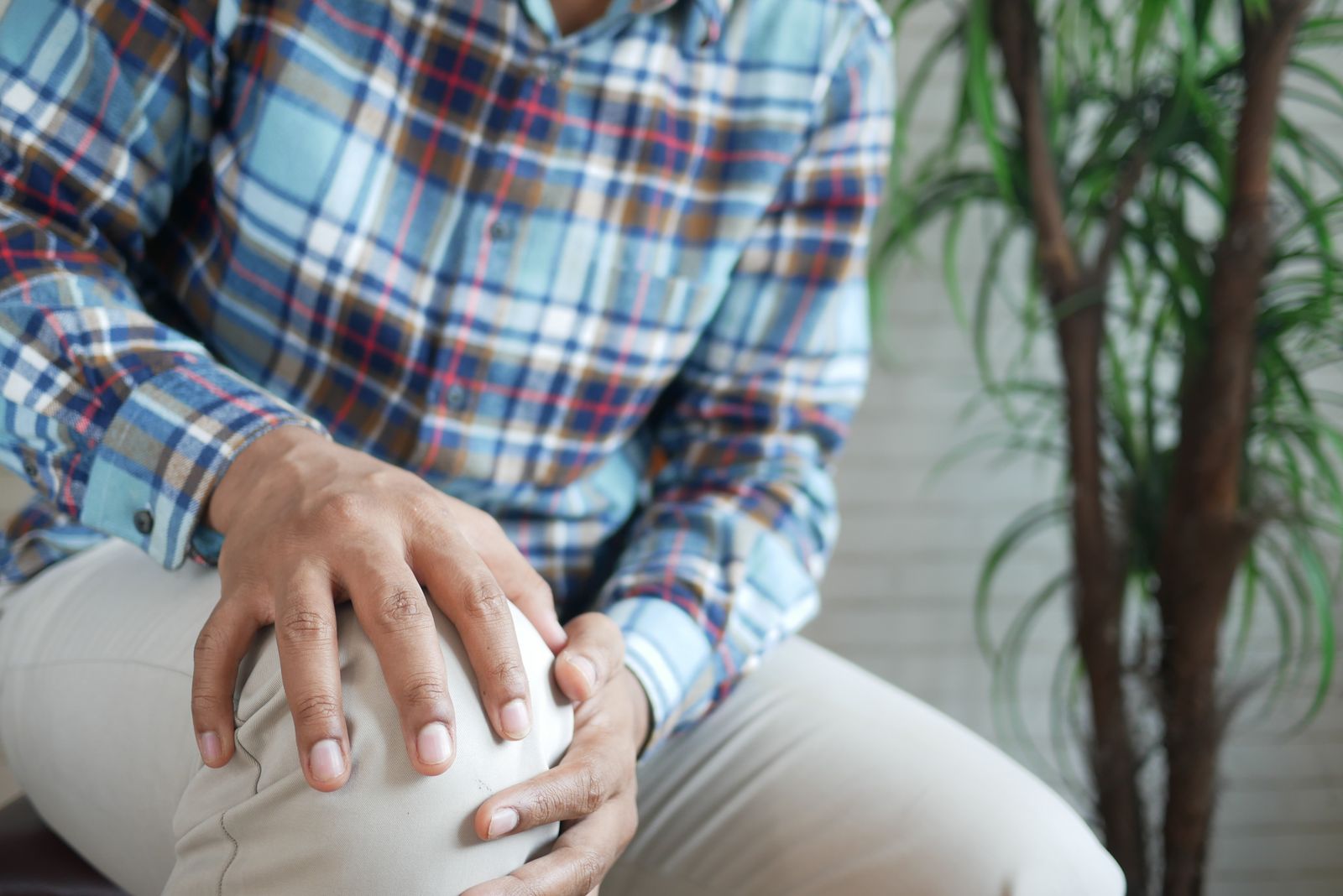
A knee that hurts on stairs and after standing is a frequent reason a parent reaches for a brace. Three shapes, and they do different jobs.
A sleeve is a tube of elastic fabric that adds warmth and a sense of where the joint is rather than real support. Vive's knee sleeves are sized by measuring "circumference around the middle of the kneecap for the best fit", with published ranges from 13 to 19 inches. A sleeve is the right first purchase for a mildly achy knee and the wrong one for a knee that gives way.
A hinged brace adds metal uprights at the sides to resist the knee bending sideways. Vive's hinged knee brace has hinges that "support ligaments, tendons and joints and are removable if less support is needed", so it can step down as a parent improves. This is the shape NIAMS is describing when it talks about stabilizing a joint, and the shape most worth having fitted rather than guessed.
A strap sits below the kneecap for pain at the front of the knee and does nothing for the joint itself.
The rule for all three: a brace that is comfortable to wear all day is usually not doing much, and a brace tight enough to leave marks is too tight. If the knee gives way on stairs, the next call is a physical therapist, not a bigger brace; that is also where the exercises in fall prevention exercises for seniors come from.
The back
Back braces are the category where what is sold and what is needed diverge most. A lumbar support belt can help a parent get through a specific task, carrying laundry, a long car journey, the first week after a strain, by limiting the range of movement and reminding the back not to bend. Worn all day for months, it does the opposite of what a weak back needs, which is to work.
Vive's back brace comes in sizes covering waists from 26 to 62 inches, measured "around your waist at belly button level". Its SI belt is a narrower band for the sacroiliac joint, "Providing targeted support for SI joint dysfunction", measured at the hips rather than the waist, which is the difference to get right when ordering.
Two rules. Wear it for the task, not the day. And new back pain in an older adult, especially with a fall behind it or with weight loss, fever or leg weakness alongside it, is a doctor's problem first; an osteoporotic fracture can present as back pain that a belt will quietly mask, which is why osteoporosis in older adults is the page to read next if that is the picture.
The ankle and the wrist
Ankle. An ankle brace suits a parent whose ankle turns on uneven ground or who is recovering from a sprain. Vive's ankle brace is "universally sized" and fits either side. The caution specific to older parents: an ankle that swells by evening every day is a circulation or heart question, not a support question, and belongs with the weight and swelling section of heart disease in older adults.
Wrist and thumb. This is where an off-the-shelf brace is most clearly evidence-based. NIAMS, on carpal tunnel syndrome, lists it as the usual first step: "Using a splint on the hand and wrist at night is a common initial treatment option for CTS symptoms", and in its self-care list, "Wearing a splint on your hand and wrist at night." Night is the operative word, because the wrist curls in sleep and that is when the nerve is squeezed. Vive's overnight wrist brace is one size and is described on its page as giving "stabilizing support and adjustable compression for relieving carpal tunnel" pain. For thumb-base arthritis, which is the other common hand complaint in older parents, Vive's thumb brace immobilizes the thumb with two aluminum splints and is reversible for either hand; our gifts for someone with arthritis in their hands guide covers the tools that go with it.
Compression sock levels explained, and why the choice is a medical one
Compression stockings are not a brace, and they are the item on this page where buying by guess does the most harm. MedlinePlus's instructions on compression stockings explain the mechanism: "You wear compression stockings to improve blood flow in the veins of your legs. Compression stockings gently squeeze your legs to move blood up your legs. This helps prevent leg swelling and, to a lesser extent, blood clots."
On choosing a level, the same page sends the decision back to the clinician: "Talk to your provider about what kind of compression stockings are right for you", noting they come in different "Pressures, from light pressure to strong pressure" and "Lengths, from knee-high to the top of the thigh". Its buying instructions are equally specific: "Get a prescription from your provider. Find a medical equipment store where they can measure your legs so you get a good fit", and check whether "your durable medical equipment benefit pays for compression stockings."
What the numbers mean in practice: the pressure is given in millimeters of mercury, and the levels on the Vive pages below run from 15 to 20 mmHg up to 20 to 30 mmHg, and the firmer a stocking is the more the provider's judgment matters. Vive's zippered stockings are "15-20mmHg of compression" and the zipper exists for the hands that cannot manage the pull; its compression socks are "Medical grade compression (20-30 mmHg)" and are sized by shoe size rather than calf measurement, which is why the medical supply store's tape measure is still the better route for a parent with real swelling.
Putting them on, from the MedlinePlus instructions, which are worth following exactly because a stocking that bunches is a tourniquet: "Put on stockings first thing in the morning before you get out of bed. Your legs have the least amount of swelling early in the morning." Then: "Hold the top of the stocking and roll it down to the heel. Put your foot into the stocking as far as you can. Put your heel in the heel of the stocking. Pull the stocking up. Unroll the stocking over your leg." And the check: "Do not let the stockings bunch up or wrinkle. Knee length stockings should come to 2 fingers below the knee bend."
For hands that cannot manage it, the same instructions list the workarounds: lotion dried first, "a little baby powder or cornstarch", rubber dishwashing gloves for grip, or "a special gadget called a stocking donner". Care matters too: "Wash the stockings each day with mild soap and water", keep two pairs, and "Replace your stockings every 3 to 6 months so that they maintain their compression and support."
And the line that belongs in every drawer where stockings live, from the same page: "If your stockings feel too uncomfortable, contact your provider. Find out if there is a different kind of stocking that will work for you. Do not stop wearing them without talking to your provider."
Heat or cold
Both are on the NIAMS list for arthritis, and they do different things. From NIAMS: "Heat therapy increases blood flow, tolerance for pain, and flexibility. Cold therapy numbs the nerves around the joint to reduce pain and may relieve inflammation." In practice that makes heat the one for a stiff morning joint before moving, and cold the one for a joint that is swollen or sore after activity.
Vive's knee ice wrap holds three gel packs and gives "up to 20 minutes of targeted temperature therapy", which is also the sensible ceiling for a single session; its heating pad comes in two sizes, the larger 12 by 24 inches. Two cautions that matter more in an older parent than a younger one: skin that has lost sensation, from diabetes or neuropathy, cannot report a burn, so heat goes on with a layer of cloth and a timer; and a parent who cannot remove a pad or wrap themselves should not be left alone with one.
Where to buy: Vive sells the knee sleeves, hinged knee brace, back brace, SI belt, ankle brace, overnight wrist brace, thumb brace, zippered stockings, compression socks, knee ice wrap and heating pad direct. Note the return rule before ordering: braces, like bathroom items, are on the list Vive does not take back once opened, which is in our Vive Health review.
Sizing, and the measurement each one needs
Every item here is sized off a different measurement, which is the source of most returns that cannot be made:
- Knee sleeve: circumference around the middle of the kneecap.
- Back brace: waist at the navel, not at the hips.
- SI belt: around the hips, lower than the back brace.
- Ankle and wrist braces: often one size, so check the fastening reaches comfortably rather than at its last hole.
- Compression stockings: ankle and calf circumference, and leg length, taken in the morning; shoe size is a proxy the medical supply store does not use for a reason.
Wearing them without making things worse
Hours, not days. Put on for the activity or the night the brace is for, off the rest of the time, unless a clinician has said otherwise. A joint that is supported around the clock stops working, and the muscles that hold it stop too.
Check the skin. Every time the brace comes off, look at the skin under it: redness that does not fade in twenty minutes, any broken skin, any numbness or tingling below the brace means it is too tight or wrongly placed. Older skin tears easily, and a parent with neuropathy may not feel the pressure.
One joint, one plan. If two braces appear for two joints in the same month, that is a conversation with a doctor about what is going on, not a shopping decision.
Set an end. A brace bought for a strain has a review date two weeks out: better, the same, or worse, and worse or the same means an appointment.
What Medicare pays for
Braces are one of the few items in this guide Medicare treats as durable medical equipment: Medicare's DME coverage page states that "Part B covers medically necessary DME if your doctor or other health care provider orders it for use in your home", and and braces are among the equipment supplied under it; ask the prescriber or a Medicare-enrolled supplier what a specific brace would cost under Part B, which is 20 percent of the approved amount after the deductible for covered items. That is another reason to have the knee or back brace prescribed rather than guessed: the prescribed one may be paid for, and it is fitted.
Compression stockings are the opposite case, and MedlinePlus's instruction to "Ask if your durable medical equipment benefit pays for compression stockings" is worth taking literally, because the answer depends on the diagnosis. Expect to pay for over-the-counter socks: about $11 for two pairs of Vive's 20 to 30 mmHg socks and $17 for the zippered pair, on the day we read the prices. Vive Health does not accept Medicare, Medicaid or HSA cards, and says so in its FAQ.
Frequently Asked Questions
Does a knee brace help an elderly parent with arthritis? It can stabilize the joint, which NIAMS says may be helpful when the brace is prescribed by a doctor and fitted by a health care professional. A sleeve adds warmth and awareness rather than support; a hinged brace resists sideways movement. Neither treats the arthritis, and a knee that gives way needs a physical therapist rather than a stronger brace.
How do you put on compression stockings? First thing in the morning before getting out of bed, when the legs are least swollen. Roll the stocking down to the heel, put the foot in as far as it goes, seat the heel, then unroll it up the leg and smooth out every wrinkle; knee-length stockings should finish two fingers below the bend of the knee. Lotion dried first, cornstarch, rubber dishwashing gloves or a stocking donner all help hands that struggle.
What compression level should an elderly parent wear? That is a decision for their provider, who may write a prescription and send them to a medical supply store to be measured. Over-the-counter levels run from light through 15 to 20 mmHg to 20 to 30 mmHg; the higher levels are where a clinician's judgment matters most, since compression on a leg with poor arterial circulation can cause harm.
Heat or cold for arthritis pain? NIAMS describes heat as increasing blood flow, pain tolerance and flexibility, which suits a stiff joint before moving, and cold as numbing the nerves around the joint and possibly relieving inflammation, which suits a joint that is swollen after activity. Twenty minutes is a reasonable session, with cloth between the source and the skin, and neither belongs on skin that cannot feel.
Should an elderly parent wear a back brace all day? No, unless a clinician has said so. A lumbar belt is for a task or a recovery period; worn constantly it lets the muscles that support the spine do less. New back pain after a fall, or with fever, weight loss or leg weakness, is a reason to see a doctor rather than to tighten a belt.
The brace is the smallest part of the plan
Buy the one that matches the joint and the moment, wear it for the task rather than the day, look at the skin under it, and set a date to decide whether it worked. If it did not, the next step is an appointment. For the knee and hip pain underneath most of these purchases, arthritis in older adults covers what is going on and what treats it; if the legs are swelling rather than aching, that belongs with heart disease in older adults. Supports are one line in the aging-in-place plan; if you would like someone to read what you are dealing with before you order, write to us.
Sources
- National Institute of Arthritis and Musculoskeletal and Skin Diseases, Osteoarthritis: diagnosis, treatment, and steps to take (braces prescribed and fitted, shoe inserts, heat and cold) and Carpal tunnel syndrome: diagnosis, treatment, and steps to take (night splinting).
- MedlinePlus, National Library of Medicine, Compression stockings (purpose, choosing pressure and length, prescription and fitting, putting them on, care, when to call).
- Vive Health, product pages for the knee sleeves, hinged knee brace, back brace, SI belt, ankle brace, overnight wrist brace, thumb brace, zippered compression stockings, compression socks, knee ice wrap and heating pad (specifications as published on September 21, 2026), and its FAQ (payment methods).
- Medicare.gov, Durable medical equipment (DME) coverage.