
Fall Prevention Exercises for Seniors: The Balance and Strength Moves That Work
Fall prevention exercises for seniors, backed by research: the balance and strength moves that cut falls, how often to do them, and how to start safely.
ElderHearth offers general information, not medical advice. We are not physical therapists. Have your parent's doctor or a physical therapist clear them and set a starting point before they begin any new exercise, especially after a fall, surgery, or a new diagnosis.
Fall prevention exercises for seniors are one of the few things shown to actually lower fall risk, not just work around it. The right balance exercises for seniors, paired with a little leg strength, measurably cut falls: research on the Otago program shows a 35 to 40 percent reduction, and does tai chi prevent falls? It cut them by more than half in one major trial. This guide covers the specific moves that work, how often to do them, and how to start safely. First, though, have your parent's doctor or a physical therapist clear them, because the right starting point depends on their current balance, strength, and health.
The short version: Do balance and leg-strength moves three times a week, about 30 minutes each. Start holding a sturdy chair or counter. The core four are the sit-to-stand, the single-leg stand, the heel-to-toe walk, and heel raises. Tai chi has the strongest evidence of all if your parent can join a class. Progress slowly, and stop if anything causes pain, dizziness, or chest tightness.
Do fall prevention exercises actually prevent falls?
Yes, and the evidence is unusually strong for something this simple and free. The CDC reports that more than one in four adults 65 and older falls each year, and the U.S. Preventive Services Task Force recommends exercise as one of the most effective ways to prevent falls in older adults living at home.
The specific numbers are what make it worth the effort:
- The Otago Exercise Program, a set of strength and balance moves done at home, produces a 35 to 40 percent reduction in falls, according to the National Council on Aging.
- Tai chi has the strongest single-trial result. In a 2018 randomized trial in JAMA Internal Medicine, a tai ji quan program reduced falls by 58 percent compared with stretching and by 31 percent compared with a multimodal exercise program.
- Balance and coordination fade quietly with age as vision, inner-ear function, muscle strength, and reaction time all decline together, and these are exactly the systems training rebuilds.
The takeaway: consistency matters more than intensity. A few simple moves, done three times a week, do more for fall risk than an occasional hard workout.
Exercises to prevent falls in the elderly, from chair exercises to balance moves for seniors
These four show up in nearly every evidence-based program. Have your parent do them next to a sturdy chair, counter, or wall they can grab, with you nearby at first.
- Sit-to-stand. From a firm chair, stand up without using the hands if possible, then sit back down slowly. This builds the exact strength used to rise from a chair or toilet. Start with 5, work toward 10 to 15.
- Single-leg stand. Holding the counter, lift one foot an inch off the floor and hold for 10 seconds, then switch. Progress to a lighter touch as balance improves.
- Heel-to-toe walk. Walk in a straight line placing the heel of one foot directly in front of the toes of the other, 10 to 15 steps, near a wall for support. This trains the narrow-base balance that stairs and turns demand.
- Weight shifts and side steps. Standing tall, shift weight fully onto one foot, then the other, then step slowly sideways along the counter. This rehearses catching yourself when balance tips.
Strength exercises that prevent falls
A fall is often a strength problem as much as a balance one: weak legs cannot correct a stumble. Build the legs.
- Heel raises. Holding the counter, rise onto the balls of both feet, then lower slowly. 10 to 15 reps. This strengthens the calves that push off and stabilize each step.
- Side leg raises. Holding support, lift one leg straight out to the side and lower with control, 10 per side. This targets the hip muscles that keep you steady.
- Back leg raises. Lift one leg straight behind without leaning forward, 10 per side, for the hips and lower back.
- Sit-to-stand counts here too, since it is the single best combined strength-and-balance move for older adults.
What about tai chi?
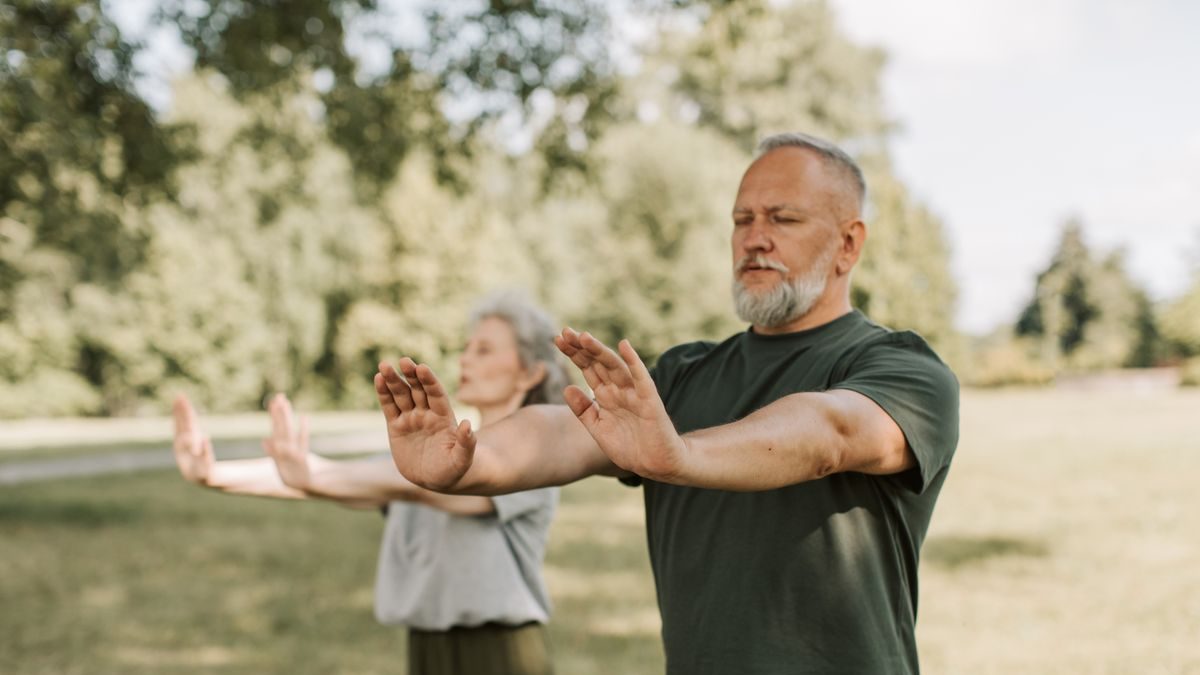
Tai chi has the strongest evidence of any single fall-prevention exercise, so if your parent can join a class, it is worth prioritizing. Its slow, flowing weight shifts train balance, leg strength, and confidence at once. The program in the 2018 JAMA Internal Medicine trial, Tai Ji Quan: Moving for Better Balance, was designed specifically for older adults at risk of falling. Many senior centers, YMCAs, and SilverSneakers plans offer classes, and a class also adds the social contact that helps people keep going.
Which fall prevention exercises work best?
The right choice depends on your parent's current ability and whether they prefer home or a class.
| Program | Falls reduction | Best for | How often |
|---|---|---|---|
| Otago (home strength + balance) | 35 to 40% | Frailer or homebound parents, or those who can't get to a class | 3x a week |
| Tai chi (Tai Ji Quan) | Up to 58% vs stretching | Parents who can attend a class and want the strongest evidence | 2 to 3x a week |
| General strength + balance | 20 to 45% | Most reasonably active seniors, done at home or a gym | 3x a week |
How often, and how to start safely
The evidence points to balance and strength work at least three times a week, around 30 minutes a session. A few rules make it safe:
- Get a starting point. Ask your parent's doctor for a fall-risk screen (many clinics use the CDC's STEADI tools) or a physical therapist referral, especially after any fall.
- Hold on at first. Do balance moves beside a counter or a sturdy chair, and have someone nearby until they are steady.
- Progress slowly. Add reps or reduce how hard they hold on over weeks, not days.
- Pair it with the rest of the plan. Exercise works best alongside a safe home. See our guides to fall prevention at home, room-by-room home safety, and bathroom safety. If your parent is unsteady enough to need it, the right rollator or walker works with the exercises, not instead of them.
When to check with a doctor first, or stop
Some situations need a professional's input before starting:
- Recent surgery, a fracture, or a recent fall with unexplained injury.
- Osteoporosis. Certain moves (deep forward bends and twists) can be risky for fragile spines, so check our notes in osteoporosis in older adults and get a tailored plan.
- Heart or blood-pressure conditions, or medications that cause dizziness.
Stop and call the doctor if an exercise brings on chest pain, sharp joint pain, severe shortness of breath, or faintness. A little muscle fatigue is fine; pain and dizziness are not.
A knee that gives way needs the muscles around it more than it needs a wrap; for what a brace can and cannot do in the meantime, see our guide to braces and supports for elderly parents.
Frequently Asked Questions
Do balance exercises prevent falls? Yes. Structured balance and strength exercise is one of the most effective proven ways to reduce falls in older adults. Home programs like Otago cut falls 35 to 40 percent, and tai chi has reduced them by more than half in a major trial.
What is the best exercise to prevent falls? There is no single best move, but the sit-to-stand is the highest-value one because it builds leg strength and balance together. Tai chi is the best overall program by the evidence, and the Otago set is best for frailer parents at home.
How often should seniors do balance exercises? At least three times a week, about 30 minutes a session, is the level the research is built on. Consistency matters more than how hard each session is.
Can you improve balance after 70? Yes. Balance and strength respond to training at any age. Trials of tai chi and the Otago program included adults in their 70s, 80s, and beyond, and the Otago program is especially effective for frail older adults.
Is tai chi good for fall prevention? It is the single most evidence-backed option. A 2018 JAMA Internal Medicine trial found a tai ji quan program reduced falls 58 percent versus stretching and 31 percent versus another exercise program.
A last word
Start with one move. The sit-to-stand is the best first, because rising from a chair is the moment so many falls begin. Have your parent do three of these today while you steady the chair, then three times this week, and let it build from there. The point is the quiet confidence of a parent who can get up unaided, turn without grabbing the wall, and catch themselves when they stumble. That is what fall prevention exercises for seniors really buy: more of the independence that keeps them safely at home.
If you would like someone to listen, you are welcome to write to us.
Sources
- CDC, Facts About Falls and the STEADI fall-prevention initiative.
- National Council on Aging, Otago Exercise Program (35 to 40 percent reduction in falls).
- Li F, et al., Tai Ji Quan and fall prevention, JAMA Internal Medicine (2018) (falls reduced 58 percent vs stretching, 31 percent vs multimodal exercise).
- U.S. Preventive Services Task Force, Falls Prevention in Community-Dwelling Older Adults.
- National Institute on Aging, Exercise and Physical Activity.